Resin Solvent

To assist resin industry professionals, Arcane Industries has developed a full range of products designed to substitute acetone, considerably reducing user exposure and environmental impact at the same time.

8 products
  • Limonene / D-Limonene, orange terpene - CAS No. 5989-27-5 5L Jerry Can Limonene / D-Limonene, orange terpene - CAS No. 5989-27-5 5L Jerry Can

    Orange terpene, D-limonene CAS 5989-27-5 - TERPOR is a natural solvent derived from orange peel.

    View product
    Regular price 94,00€ excl. VAT
    Sale price 94,00€ excl. VAT Regular price excl. VAT
    Contact us
    5L Jerry Can Carton 4x5L 20L Jerry Can +1 formats
  • Arcane 329 5L Jerry Can Arcane 329 5L Jerry Can

    ARCANE 329 is an acetone substitute for dissolving resins, particularly epoxy resins.

    View product
    Regular price 44,10€ excl. VAT
    Sale price 44,10€ excl. VAT Regular price excl. VAT
    In stock
    5L Jerry Can 20L Jerry Can 200L Plastic Drum
  • Free delivery from €400 excl. tax

    Within 3 to 5 business days

    LEARN MORE
  • Polyester Resin Cleaning Solvent - SOLVENT ARCANE 225 Liquid / 5L Jerry Can Polyester Resin Cleaning Solvent - SOLVENT ARCANE 225 Liquid / 5L Jerry Can

    DISSOLVANT 225 : Safety solvent for Polyester Resins, a substitute solvent for acetone in resin cleaning applications

    View product
    Regular price 59,90€ excl. VAT
    Sale price 59,90€ excl. VAT Regular price excl. VAT
    In stock
    Liquid / 5L Jerry Can Liquid / Carton 4x5L Liquid / 20L Jerry Can +5 formats
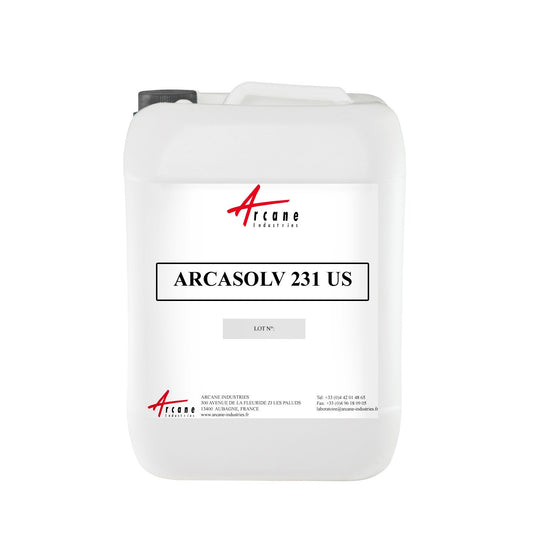
  • Gelcoat Cleaner Thinner - ARCASOLV 231 US 5L Jerry Can Gelcoat Cleaner Thinner - ARCASOLV 231 US 5L Jerry Can

    The ARCASOLV 231 US is an innovative product for acetone substitution.

    View product
    Regular price 57,80€ excl. VAT
    Sale price 57,80€ excl. VAT Regular price excl. VAT
    In stock
    5L Jerry Can 20L Jerry Can 200L Plastic Drum +1 formats
  • Vinyl Ester and Acrylic Resin Cleaner - ARCANE 228 US 5L Jerry Can Vinyl Ester and Acrylic Resin Cleaner - ARCANE 228 US 5L Jerry Can

    ARCANE 228 US: Vinyl ester and acrylic resin cleaner - ARCANE 228US is a powerful cleaner.

    View product
    Regular price 54,10€ excl. VAT
    Sale price 54,10€ excl. VAT Regular price excl. VAT
    In stock
    5L Jerry Can Carton 4x5L 20L Jerry Can +2 formats
  • REQUEST A CALLBACK
  • Light Cleaner Thinner for Epoxy Resin and Gelcoat - ARCASOLV 131 US 5L Jerry Can Light Cleaner Thinner for Epoxy Resin and Gelcoat - ARCASOLV 131 US 5L Jerry Can

    TheARCASOLV 131 US is an innovative product for acetone substitution.

    View product
    Regular price 51,50€ excl. VAT
    Sale price 51,50€ excl. VAT Regular price excl. VAT
    In stock
    5L Jerry Can 20L Jerry Can 200L Plastic Drum +1 formats
  • Polyester or polyurethane foam cleaner - ARCANE 314 5L Jerry Can Polyester or polyurethane foam cleaner - ARCANE 314 5L Jerry Can

    ARCANE 314 : Cleaner polyester or polyurethane foams

    View product
    Regular price 85,00€ excl. VAT
    Sale price 85,00€ excl. VAT Regular price excl. VAT
    In stock
    5L Jerry Can 20L Jerry Can
  • Professional label remover - ARCANE 248 5L Jerry Can Professional label remover - ARCANE 248 5L Jerry Can

    ARCANE 248 : Product to facilitate the removal of transport labels from non-absorbent surfaces.

    View product
    Regular price 35,70€ excl. VAT
    Sale price 35,70€ excl. VAT Regular price excl. VAT
    In stock
    5L Jerry Can 20L Jerry Can 200L Plastic Drum

There are many resins on the market, all meeting various requirements depending on each project's specifications. The most common ones are:

- Epoxy

- Polyester

- Polyurethane

- Acrylic

- ...

Out of habit, without any real chemical reason, users most commonly use acetone to clean their injection machine, their bubble-breaker roller, their brush, their knife, and all other equipment. We have developed acetone substitutes. 

Also discover our adhesive solvents.

Frequently asked questions about resin solvents

Resin solvent: how to replace acetone?

Acetone is a solvent conventionally used for cleaning resins. Although very interesting (powerful solvent, highly effective, fast drying, recyclable), this solvent poses dangers for users such as fire risk and health hazards. Acetone is a highly flammable solvent (flash point -18°C), with binding regulatory exposure limit values (Article R. 4412-149 of the French Labor Code), which is why more and more companies are looking to substitute this solvent. To replace acetone, one must have a good knowledge of the product's characteristics and its process, because if a molecule with a similar size/structure is chosen for the substitution, it may address effectiveness/process compatibility but not the exposure/fire issue. Conversely, if a molecule of different size/nature is chosen, it will likely address effectiveness/exposure/fire concerns but not always process compatibility. It is often the drying time that causes problems during substitutions. Therefore, replacing acetone can be a simple or complex undertaking, and may sometimes require adapting one's working methods. Discover our acetone substitutes on this page.

Which solvent to use for cleaning resins?

There is a very wide range of resins; depending on the main families of each, we have one or more solutions to offer you. TheArcane 225 is recommended for epoxy resins, for example. Find all our solvents on this page.

Frequently asked questions about resin solvents

Resin solvent: how to replace acetone?

Acetone is a solvent conventionally used for cleaning resins. Although very interesting (powerful solvent, highly effective, fast drying, recyclable), this solvent presents hazards for users such as fire risk and health risks. Acetone is a highly flammable solvent (flash point -18°C), with binding regulatory exposure limit values (article R. 4412-149 of the French Labour Code), which is why more and more companies are looking to substitute this solvent. To replace acetone, it is important to have a thorough understanding of the product's characteristics and its process, because if a molecule close in terms of size/structure is chosen as a substitute for acetone, it may address effectiveness/process compatibility but not the exposure/fire issue. Conversely, if a molecule of a different size/nature is chosen, it will probably address effectiveness/exposure/fire concerns but not always process compatibility. It is often the drying time that causes problems during substitutions. Therefore, replacing acetone can be a simple or complex process and may sometimes require adapting working methods. Discover our acetone substitutes on this page.

Which solvent should I use to clean resins?

There is a very wide range of resins; depending on the main families of each, we have one or more solutions to offer you. TheArcane 225 is recommended on epoxy resins for example. Find all our solvents on this page.