Key takeaways
- Potassium hydroxide is preferred for liquid and soft soaps: it forms potassium soaps that are generally more soluble than the sodium soaps produced using sodium hydroxide (NaOH).
- The 50% potassium hydroxide solution simplifies preparation: the potassium hydroxide is already dissolved, but each kilogram also supplies 500 g of water.
- 90% potassium hydroxide flakes offer greater flexibility: manufacturers can adjust the amount of water to suit their recipe and saponification process.
- The amount of active potassium hydroxide is critical: calculations must account for the raw material’s actual purity, the oils’ saponification values, and the water content of the formula.
When making liquid soap or black soap, the choice of caustic potash directly affects preparation, the amount of water added, and production planning. A 50% potassium hydroxide solution and 90% potassium hydroxide flakes provide the same saponifying agent, but they are not used in the same way.
In professional soapmaking, the 50% potassium hydroxide solution simplifies the supply of an alkaline solution, while the flakes allow greater control over the concentration and the water content of the formulation. The choice therefore depends on the process, equipment, and desired soap.
Why use caustic potash instead of caustic soda?
Both caustic potash and caustic soda are used in the saponification of fats. The main difference between them lies in the types of soap produced.
Potassium hydroxide (CAS 1310-58-3) produces potassium salts of fatty acids, which are generally more soluble in water. It is therefore particularly suitable for making liquid soaps, soft soaps, and black soaps.
Sodium hydroxide (CAS 1310-73-2) forms sodium soaps, which are generally harder and less soluble, making them particularly suitable for solid soaps.
| Criterion | Caustic potash | Caustic soda |
|---|---|---|
| Type of soap | Liquid, soft, paste-like | Generally solid |
| Soap solubility | Generally higher | Generally lower |
| Applications | Black soap, liquid soap, soap paste | Solid soap, bar soap |
| Molar mass | 56.11 g/mol | 40.00 g/mol |
This difference in molar mass means that a recipe designed for sodium hydroxide cannot be used unchanged with potassium hydroxide. The saponification calculation must be fully adjusted.
Good to know: Some soaps use a mixture of potassium hydroxide and sodium hydroxide to adjust their texture and behavior when diluted. This approach requires separate calculations for the two alkalis and a validated formulation.
50% potassium hydroxide solution or 90% potassium hydroxide flakes: what’s the difference?
Both products supply potassium hydroxide to the formulation. The main difference is their active ingredient concentration and the amount of water already present.
50% potassium hydroxide solution: a preprepared solution
The 50% potassium hydroxide solution is an aqueous solution containing 50% potassium hydroxide by mass.
It saves manufacturers from having to dissolve the flakes initially and can make it easier to standardize production. However, they must account for the water already present in the alkaline solution.
This form is particularly suitable for soapmakers seeking a consistent supply, a predefined concentration, and simpler preparation.
90% potassium hydroxide flakes: greater control over water content
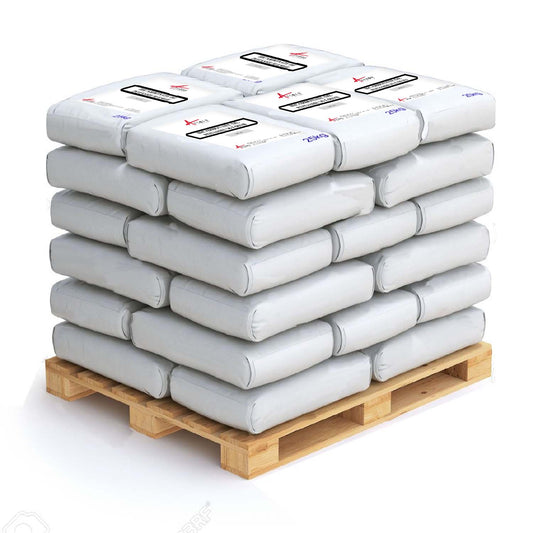
The 90% caustic potash flakes are a solid, hygroscopic product intended for professional use.
It can be used to prepare an alkaline solution at the concentration required for the process. This is useful for soapmakers who want to adjust the amount of water, the concentration of their soap paste, or their manufacturing conditions.
In return, dissolution requires appropriate equipment, temperature control, and a rigorous safety procedure.
| Criterion | 50% potassium hydroxide solution | 90% caustic potash flakes |
|---|---|---|
| Form | Liquid | Solid |
| Active KOH | 50 % | Approximately 90% |
| Water added | 50% of the product | Water to add for dissolution |
| Preparation | Preprepared solution | Dissolution required |
| Main benefit | Ease of production | Formulation flexibility |

How do you calculate the amount of potassium hydroxide needed?
In professional formulation, calculations must always be based on the actual amount of active potassium hydroxide.
Mass of commercial product = mass of pure KOH needed ÷ mass fraction of KOH.
For example, to supply a theoretical 10 kg of pure KOH:
| Parameter | 50% solution | 90% flakes |
|---|---|---|
| Product mass | 20 kg | 11.11 kg |
| Pure KOH supplied | 10 kg | 10 kg |
| Water supplied | 10 kg | To be determined during dissolution |
Theoretical example of equivalent active ingredient amounts, not a recommended dosage for a soap recipe. Exact batch content, impurities, saponification values, and the full formula must be included in production calculations.
Best practice: To compare the two solutions economically, calculate the cost per kilogram of active potassium hydroxide rather than just the price per kilogram of the commercial product. Then add the costs of dilution, handling, storage, and quality control.
Liquid soap production: controlling soap paste and its dilution
Making a potassium-based liquid soap generally involves saponifying the oils, forming a soap paste, and then adjusting it to the desired final concentration.
1. Define the oil composition
The formulator selects oils based on the desired properties: cleansing power, lather, viscosity, mildness, and stability.
Each fat or oil has its own saponification value. The amount of potassium hydroxide must therefore be calculated based on the mixture’s actual composition, not a universal dosage.
2. Form a uniform soap paste
The reaction between triglycerides and potassium hydroxide produces potassium soaps and glycerin.
Depending on the process used, particularly hot processing, production yields a paste whose consistency depends on the oils, the alkali concentration, and how far the reaction has progressed.
Before proceeding, it is essential to verify that saponification is complete and that no excess free alkali remains.
3. Adjust dilution and final texture
The paste is then diluted to achieve the desired concentration in the finished product. This step affects the liquid soap’s viscosity, uniformity, and stability.
Excessive dilution can produce a soap that is too thin. Conversely, insufficient dilution can make the soap difficult to package or prevent it from mixing uniformly.
Technical tip: validate the dilution on a pilot batch before applying it more widely. Check the product’s viscosity, uniformity, pH, free alkali, and stability after it has rested. Final viscosity does not depend solely on the amount of water.
Coconut oil or linseed oil: which oil should you choose?
The choice of oils is just as important as the choice of potash. Differences in fatty acid composition directly affect the soap’s properties.
| Oil | Desired properties | Application |
|---|---|---|
| Coconut oil | Foaming and cleansing power | Foaming liquid soaps |
| Raw linseed oil | High in unsaturated fatty acids | Certain black soap formulas |
| Oil blend | Balance of lather, cleansing, and texture | Custom-formulated soaps |
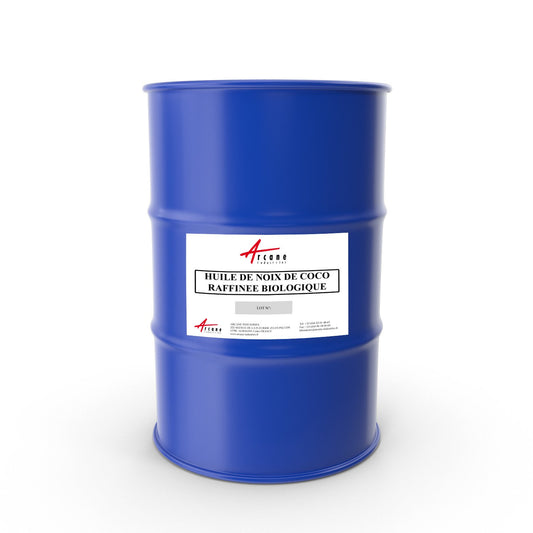
The copra oil or organic refined coconut oil in our range is rich in lauric acid, valued for its contribution to soaps’ foaming and cleaning properties.
For black soaps, raw linseed oil may be considered depending on the formulation. However, it must be of a quality suitable for the soap’s intended use, and its saponification value must be verified.
Take care when choosing linseed oil: technical-grade boiled linseed oil, intended in particular for wood treatment, should not automatically be substituted for raw linseed oil of a grade suitable for soapmaking. Check the grade, any additives, and the supplier’s documentation.
Ecocert-verified potassium hydroxide: why does it matter for soapmaking?
Choosing the right grade is particularly important for manufacturers seeking certification for soaps or detergents.
An Ecocert-verified raw material can make it easier to compile documentation demonstrating compliance with the relevant standards, provided the validity and scope of its verification certificate are confirmed.
We offer several grades of potassium hydroxide flakes, including technical-grade products and a food-grade E525 product. Food grade does not automatically mean it has been assessed against a cosmetics standard.
Best practice: if you intend to have your product certified, request the Ecocert verification certificate for the exact product before ordering. Verification of a raw material does not constitute certification of the finished soap.
Safety: what precautions should you take when handling potassium hydroxide?
Caustic potash is a strong, corrosive base. Handling it requires a suitable workstation and trained operators, whether it is in liquid or solid form.
The flakes are hygroscopic, and dissolving them in water releases heat. The 50% solution eliminates this initial step but remains highly corrosive itself.
Caution: risk of chemical burns and splashes.
Use protective equipment suitable for corrosive products: eye and face protection, compatible gloves, and protective clothing. When preparing a solution, gradually add the potassium hydroxide to the water, never the other way around, following a validated procedure. Use a compatible container, monitor the temperature, and provide adequate ventilation. Always consult the SDS before use.
Storage must also account for corrosion, moisture, and incompatibility with certain materials. Containers must remain properly closed and labeled.
Need technical advice for your soap production?
Deciding between a 50% potassium hydroxide solution and 90% flakes? Need to choose the grade, concentration, or packaging suited to your production?
Our technical advisers can help you choose raw materials for your soapmaking and detergent manufacturing operations.
Phone: 04 42 82 16 82
Email: contact@arcane-direct.com
EXPLORE OUR RAW MATERIALS